
Brethren,
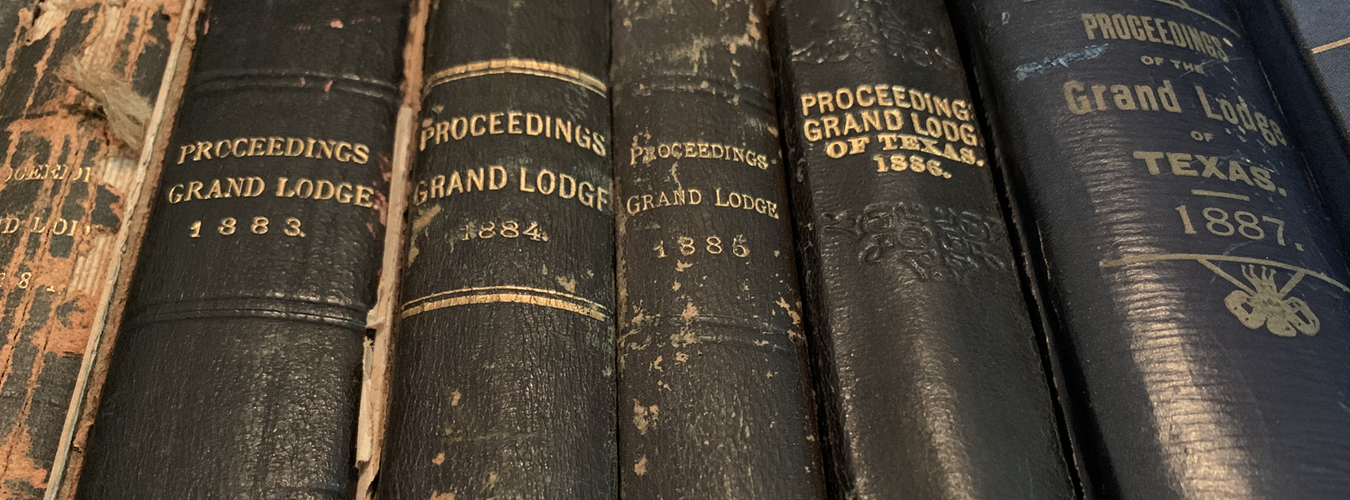
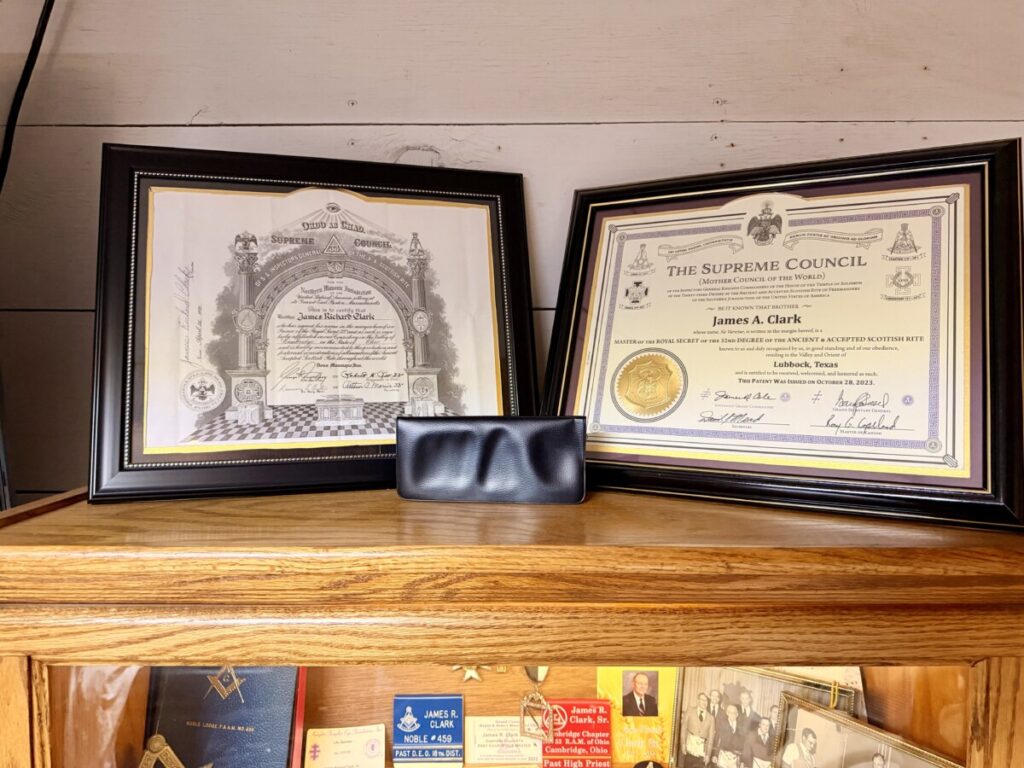
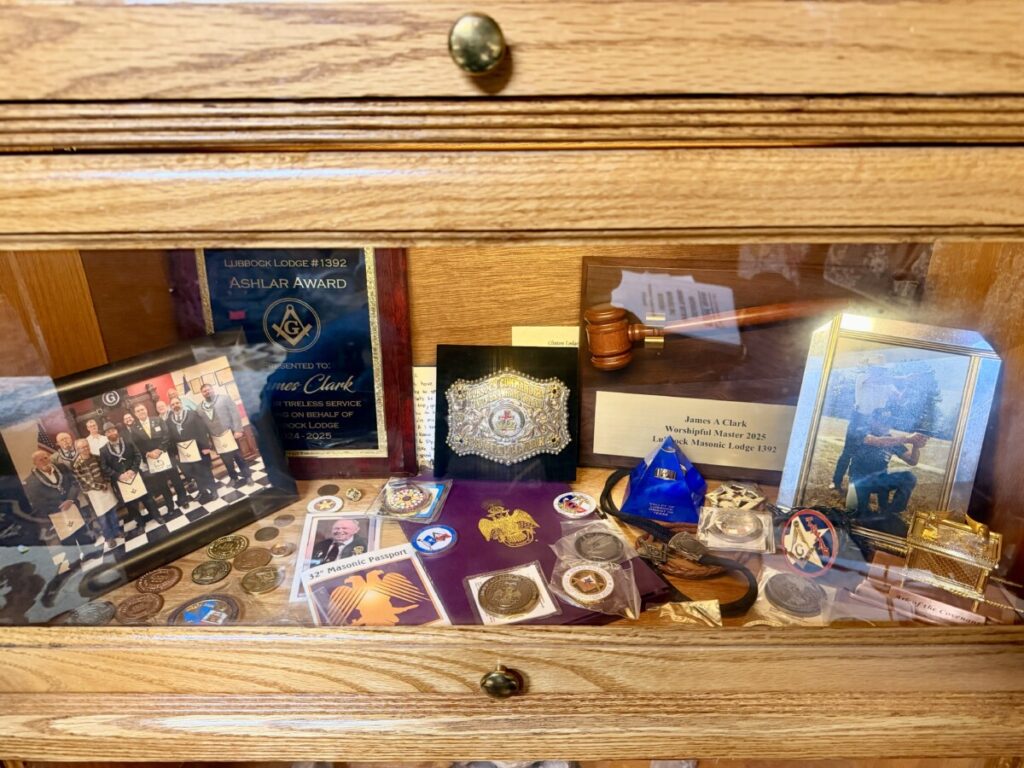
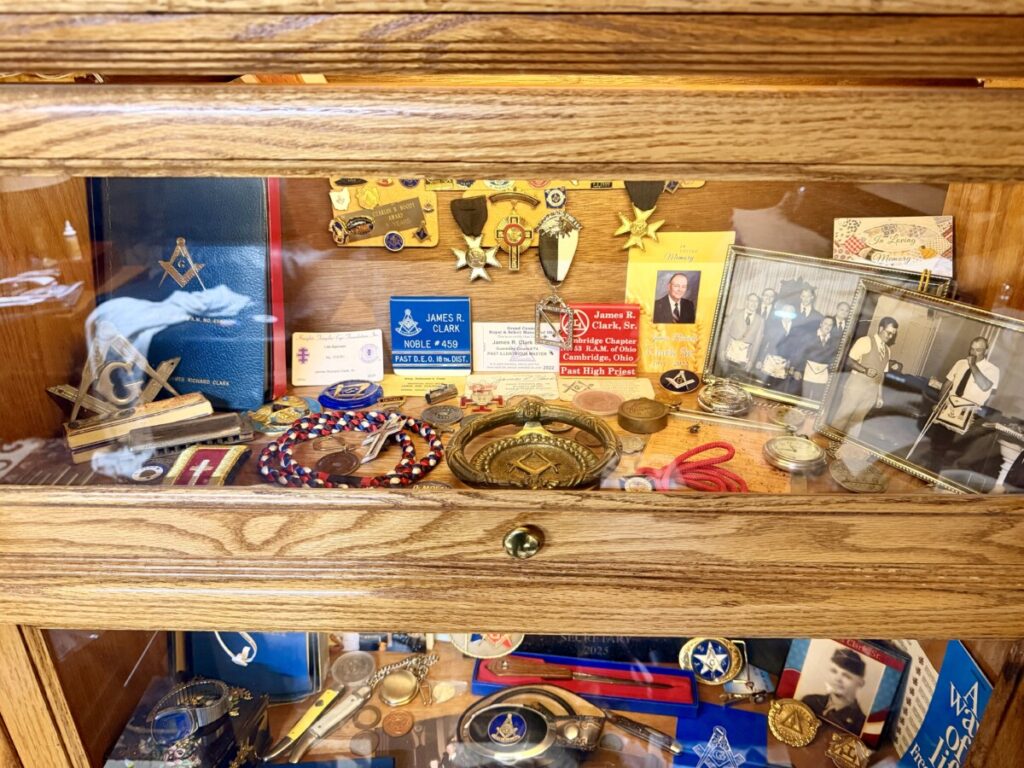
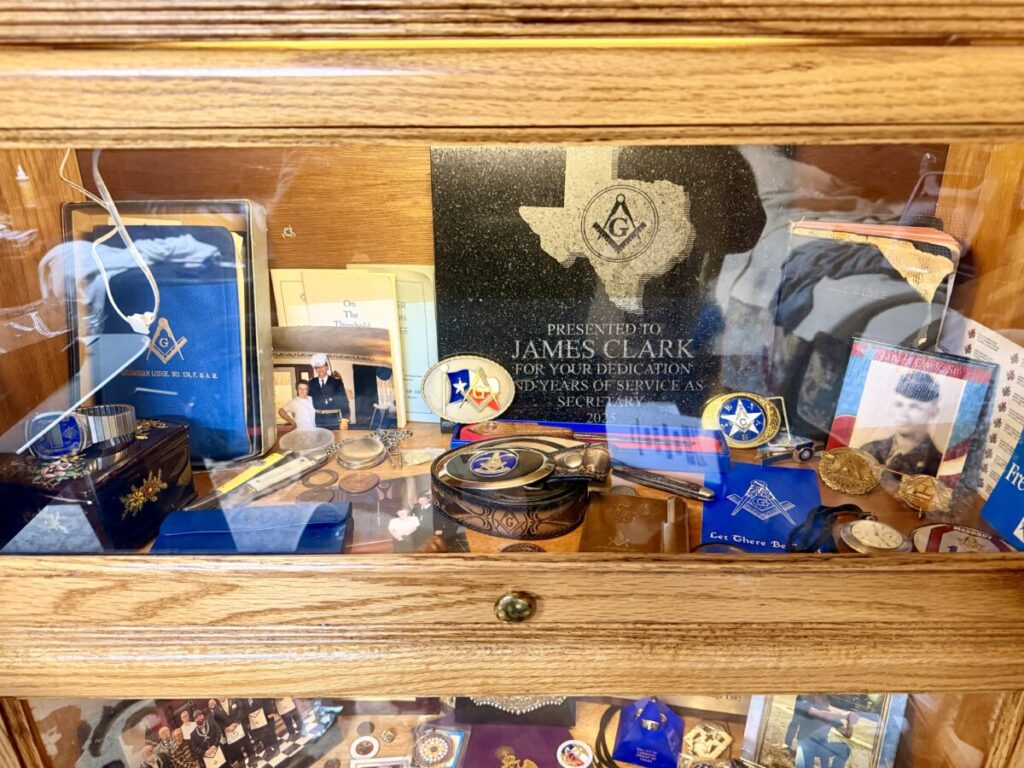
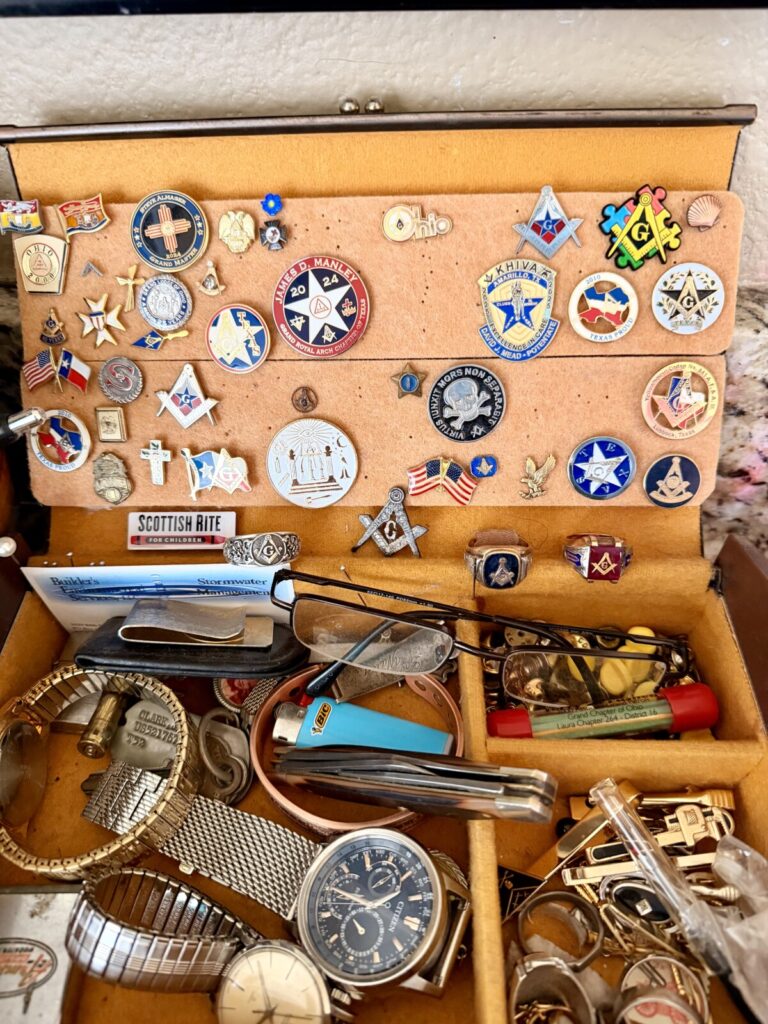
I have often shared a story about a bookcase in my home—one with glass doors and soft LED lighting—that contains the visible record of my grandfather’s Masonic journey. Some of you have seen it in person. (Pictures below)
Inside are certificates, awards, titles, jewels, and lapel pins. KYCH jewels. DDGM nameplates. Past Commander jewels. Past Master emblems. Past High Priest, Past Thrice Illustrious Master—York Rite, Scottish Rite, invitationals, and more. Shelf after shelf, from the very top down.
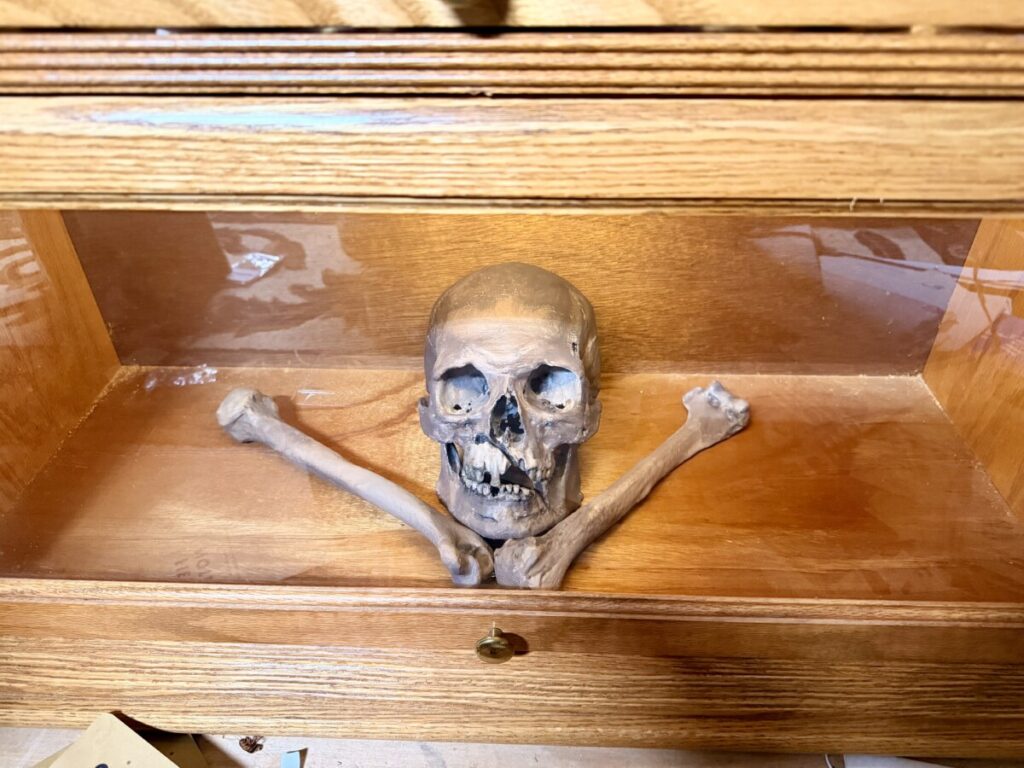
What might go un-noticed by many is the meaning of what lies on the bottom shelf. On the bottom shelf sits something different: a life size, 3D-printed human skull and crossbones.
That skull is my memento mori—a reminder that I, too, will someday die. The trinkets and titles will remain behind, but they will not go with me. What will matter is not what I accumulated, but what I became—and what legacy I leave.
That reflection has led me to an observation I have made in every Lodge I have ever known, including my own. In truth, two organizations often exist within the same tiled walls.
One is a social fraternity—marked by fellowship, meals, titles, handshakes, and shared experience. The other is a speculative quarry—a place intended for the labor of the mind, the soul, and the conscience.
Both exist for a reason. The question is not which exists, but which one governs our priorities.
This leads to a simple but searching distinction: the difference between a Masonic Career and the Masonic Cause.
When we ask whether we are more interested in our Masonic career or the Masonic cause, we are really asking:
Are we here to collect aprons, or are we here to collect ourselves?
For some, the Lodge becomes a ladder. Masonry is approached almost as a competitive sport—a sequence of milestones, offices, and honors to be attained as quickly as possible. Degrees are rushed. Offices are pursued. Jewels are accumulated. A resume is built.
I say this not as an outsider, but as one who understands the temptation. I have seen this tendency in Lodges—and in myself.
But when Masonry is treated primarily as a competition, something essential is diminished. The vices of the profane world—ambition, envy, and the thirst for preeminence—are carried into a space designed to subdue them. And when the goal becomes the title, the labor often ends once the title is achieved.
What then?
- The Career Mason seeks the East to be seen by men.
- The Cause Mason seeks the Light to be transformed by the Great Architect.
Joseph Fort Newton captured this distinction in The Builders when he wrote:
“Masonry is an institutionalized form of the search for light… It is not a secret society, but a society of secrets—secrets which no man can tell another, but which each must discover for himself.”
It is sometimes said that Masonry is simply a fraternity—a place for “good old boys” to relax and enjoy one another’s company. There is truth here. Fellowship is the cement of our structure. Without it, nothing holds.
But fellowship alone does not make a Mason.
You can find companionship at a bowling league, a football game, or a bar. What distinguishes Masonry from every other association is the application of its tenets:
- Brotherly Love — not mere liking, but the recognition of a shared divine origin.
- Relief — not just charity, but the humility to set ego aside and aid a brother in darkness.
- Truth — not only honesty, but the pursuit of divine truth hidden beneath symbol and allegory.
This is where misunderstanding often arises. The esoteric is not found in the mere repetition of words or memorization of lectures. The esoteric begins when a man asks what a symbol demands of his conduct, not simply what it means in explanation.
W. L. Wilmshurst, one of the most incisive critics of purely social Masonry, wrote in The Meaning of Masonry:
“The Lodge is not a place for social pastimes… but a place of work, and the work is the making of man out of the raw material of human nature.”
If Masonry were merely a social club, our rituals would be unnecessary ornamentation. The scholars of the Craft remind us that the true cause of Masonry is the evolution of human consciousness.
Albert Mackey expressed it plainly:
“The design of Freemasonry is not the mere communication of knowledge, but the improvement of the mind and the purification of the heart.”
James Anderson, in the Constitutions of 1723, reminds us that our true tenure is the moral law—that we are to be men of honor and honesty, governed by internal discipline, not external applause.
Wilmshurst goes even further, challenging the Brother content with Masonry’s surface:
“It is a common error to suppose that Masonry is a system of morality… It is a system of philosophy and a method of self-completion.”
This is the heart of the work: knowing thyself and mastering thyself.
The social Lodge is the scaffolding—but the personal work is the building. Remove the labor of self-knowledge, and the scaffolding stands around an empty lot.
The true Masonic cause is the realization that the Rough Ashlar is our own unrefined character, and the Perfect Ashlar is a state we may never fully reach—but must never cease pursuing.
As Wilmshurst wrote:
“Masonry is not a club where we go to be entertained, but a workshop where we go to labor upon the rough ashlar of our own character… The real Master Mason is he who has mastered himself.”
And yet, this work is not done in isolation. Wilmshurst also recognized the essential balance:
“The very assembly of the Brethren… creates an atmosphere of harmony and unified purpose which is the essential condition for the individual’s spiritual progress.”
The “good old boy” fellowship is the foundation—but it is not the Temple.
- We eat together to nourish the body.
- We laugh together to lighten the spirit.
- But behind the tiled door, we labor upon the mind and the soul.
When the social life of the Lodge serves the Masonic cause, the brotherhood deepens beyond mere acquaintance and becomes something closer to covenant.
Conclusion
If you are here only for the career, you are chasing shadows. One day you will retire. Your titles will fade. If you are fortunate, your resume will be read at a Lodge of Sorrow—and if you are luckier still, your jewels will rest on a shelf, quietly gathering dust.
But if you are here for the cause, the work never ends. You join a lineage of builders who understand that the Temple we are raising is not made with hands.
The distinction is simple:
- Other clubs are designed to help you pass the time.
- Masonry is designed to help you redeem it.
Reflection Questions
- If you were the only Mason left on earth, would you still practice the virtues of the Craft—or would the work stop because there was no one left to applaud it?
- Are we spending more time maintaining the club—the building, the bills, the dinners—than practicing the science of Masonry: study, reflection, and internal labor?
- When you look to the East, do you see a throne of power—or a station of service?
A Final Thought for the Master
“If you see your Lodge as a club, it will eventually become a burden. If you see it as a Temple, it will forever be a refuge.”
To say that Masonry is more than a social club is not to diminish fellowship. On the contrary, brotherhood is essential. Anderson called Masonry the Center of Union—a place where men who might otherwise remain at a distance are brought together.
We cannot truly know ourselves in isolation. We need the mirror of our Brethren to reveal our faults, and the support of the Craft to correct them.
The social aspect is the cement that binds us—but the cause is the stone we are shaping. Cement without stone is a puddle: messy and purposeless. Stone without cement will never stand.
We gather as a club so that we may labor as a fraternity. The fellowship creates the safety required for a man to be honest about his flaws and courageous enough to work upon his rough ashlar.
Author’s Note: This talk was given in Lubbock Lodge on January 9, 2025 by the author. It was compiled based off conversation during a return trip from Grand Chapter and Council among those brethren in the vehicle. It is the author’s opinion.
If you’ve made it through all that – perhaps sharing some ideas are in order. Here is what Lubbock Lodge will continue to pursue in an attempt to make good men better through Masonry.
1. The Education
Incorporate a short, mandatory piece of Masonic education at every stated meeting.
- The Action: A 5-10 minute reflection on a single symbol (e.g., the Trowel, the Beehive, or the Point within a Circle). Or any topic that promotes thinking and inward reflection.
- The Goal: To remind the Brethren that the Lodge room is a classroom first, a quarry for the mind, and a boardroom second.
2. Proficiency Beyond the Ritual
Often, we consider a Brother “done” once he repeats his proficiency work. The law states the subordinate lodge can vote to pass upon “suitable proficiency”. To combat the “competitive sport” mindset, create a path for deeper learning.
- The Action: Ensure the Texas Lodge System of Candidate Information is utilized through out the candidate Masonic Journey.
- The Goal: To instill that the “Masonic Career” is a lifelong study of the “Masonic Cause”, not a one-time memory test.
3. Mentorship, Not Just Coaching
We are excellent at coaching candidates to memorize words; we are often poor at mentoring them on what the words mean.
- The Action: Pair every new Mason with a “Masonic Mentor” (not just their proficiency coach). This Mentor’s job is to discuss the Cause—how to apply the Working Tools to their personal life and character. Leverage some ‘Practice nights’ into educational sessions with the newest members as well.
- The Goal: To prevent new Masons from seeing the degrees as a “ladder” and instead see them as a “transformation.”
4. Monthly appreciation
Address the “Masonic Career” head-on by honoring the work, not the title. (Stolen from Wolfforth 1447 without shame)
- The Action: Once a month, honor Brethren who have demonstrated the tenets of Brotherly Love, Relief, and Truth in the community and the craft. Appreciate them for their work and dedication.
- The Goal: To reinforce that the highest honor in Masonry is the character of the man, not the jewel on his chest.
A word on that fourth proposal, since I have just spent several pages telling you that jewels and titles are vanity. Recognition given for a title is exactly the ladder I am warning against. Recognition given for labor is something else — it is a Lodge saying out loud what its quiet men have earned in silence. Honor the work, never the rank, and the appreciation costs a man nothing in humility.
5. Audit the Meeting Efficiency
Ensure our meetings are not consumed with reimbursement votes for trivial things and minutes leaving only 5 minutes of Education and that our priorities are not inverted.
- The Action: Continue to audit our bylaws, rules and regulations, and systems. Move routine business to executive sessions and update Lodge regulations to maximize efficiency. We must guard our ‘Sacred Time’ within the tiled doors, ensuring our meetings are dedicated to ritual, education, and the essential purpose of our assembly.
- The Goal: To treat the tiled Lodge as a sanctuary for the soul, separate from the “profane” business of the world. Especially for the newest members.
